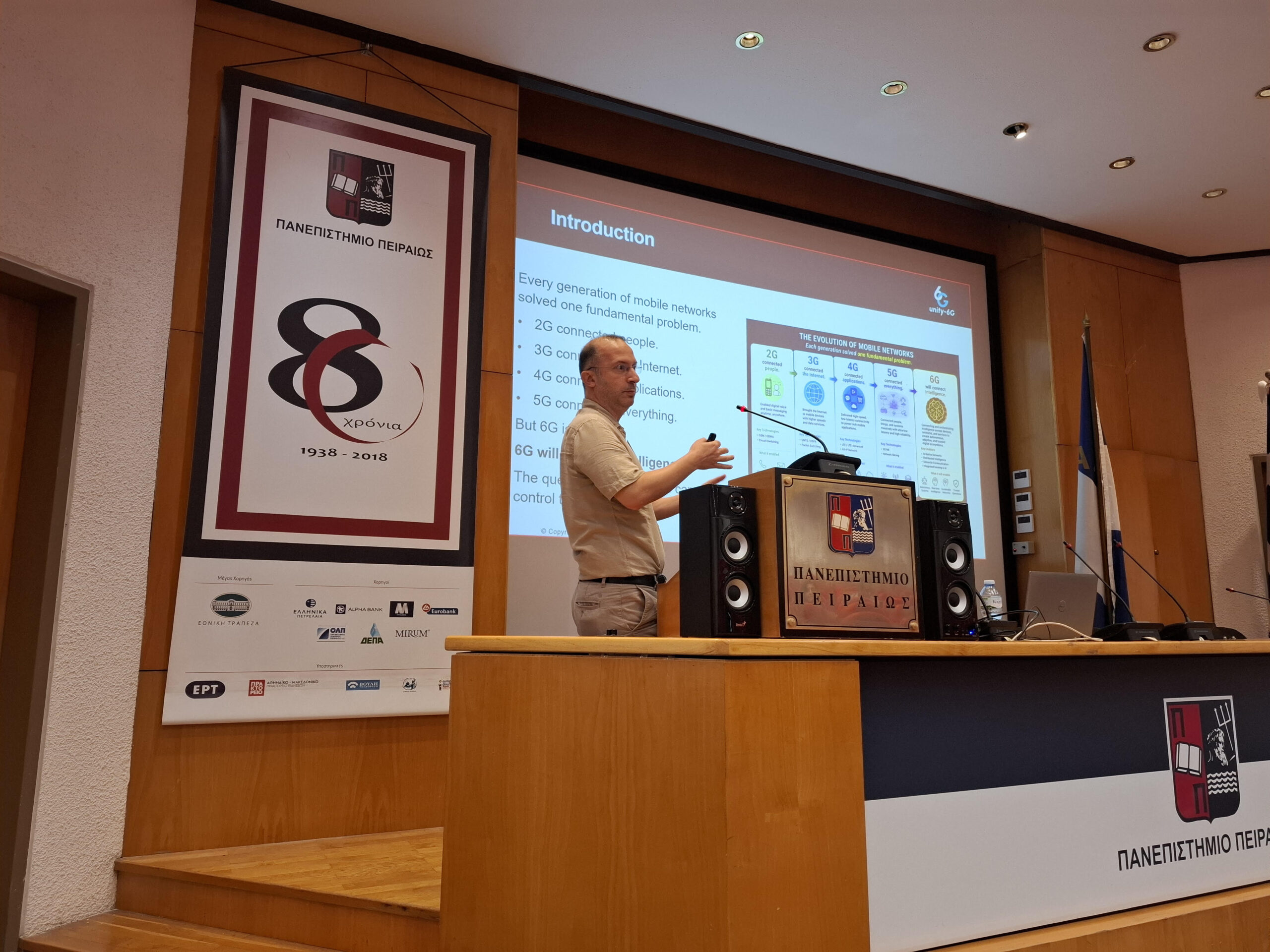
Artificial intelligence is expected to become deeply embedded in future 6G networks, enabling autonomous decision-making, intelligent orchestration and self-optimising communication systems. But as networks become increasingly autonomous, an important question emerges: how can we ensure they remain transparent, trustworthy and under control?
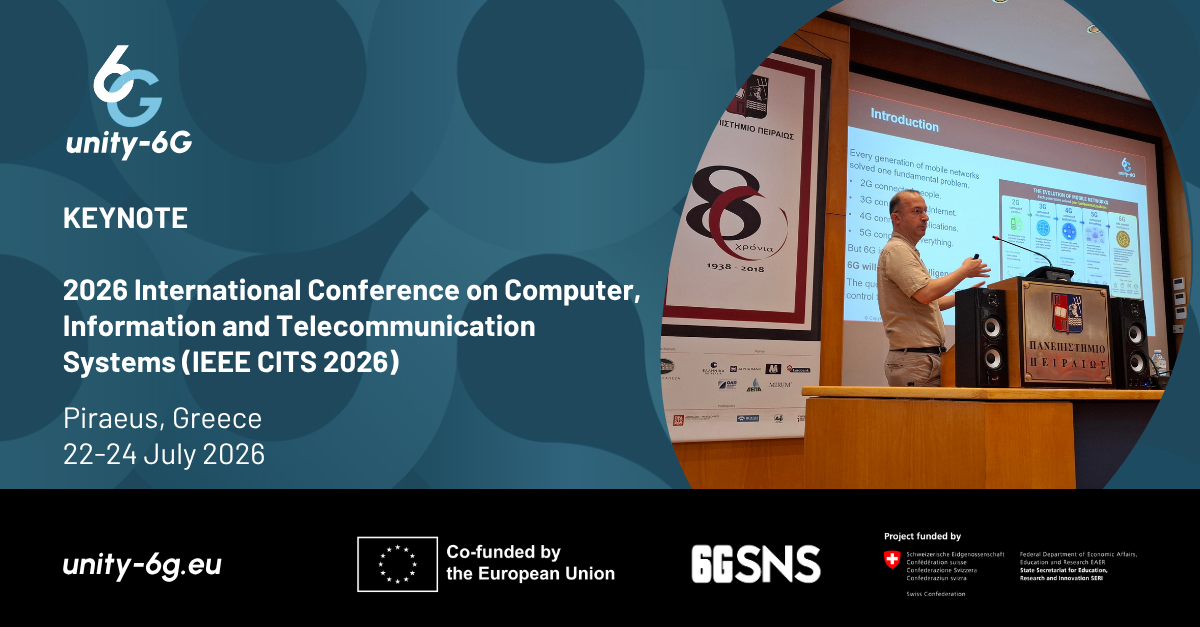
This question formed the basis of the keynote delivered by Dr. Engin Zeydan, UNITY-6G Project Coordinator and Senior Researcher at the Centre Tecnològic de Telecomunicacions de Catalunya (CTTC), at the 2026 International Conference on Computer, Information and Telecommunication Systems (CITS 2026), held from 22–24 July 2026 in Piraeus-Athens, Greece. Bringing together researchers, engineers and industry experts from around the world, CITS serves as a forum for discussing the latest advances in computer, information and telecommunication systems.
Rethinking Control in AI-Native Networks
In his keynote, “AI-Native 6G: Are We Building Networks We Cannot Control?”, Dr. Zeydan explored both the opportunities and the challenges of embedding intelligence throughout future communication networks.
The vision for 6G extends well beyond faster connectivity. AI is expected to play an active role in network management, supporting everything from Open RAN control and multi-domain orchestration to semantic communications and the integration of terrestrial and non-terrestrial networks. While these capabilities promise greater efficiency and adaptability, they also introduce new questions around explainability, accountability and trust.
Drawing on research from the UNITY-6G project, the keynote presented a unified architectural framework that combines hierarchical orchestration, AI-driven traffic engineering, semantic communications and conflict-aware control mechanisms. It also examined how distributed ledger technologies (DLTs) can help establish trust between distributed network components, creating a foundation for transparent and verifiable AI-native network operation.
From Research to Deployable 6G Systems
A recurring theme throughout the keynote was that building intelligent networks is not only a technical challenge but also an operational one. As AI takes on a growing role in network decision-making, future systems must remain understandable, stable and compliant with emerging regulatory frameworks such as the European AI Act.
By combining architectural innovation with practical implementation and early proof-of-concept results, UNITY-6G is investigating how AI-native networks can evolve into systems that are not only autonomous, but also robust enough for real-world deployment.
Contributing to the Global 6G Dialogue
IEEE CITS 2026 featured keynote presentations spanning distributed AI, edge-cloud computing, intelligent healthcare, smart cities and autonomous systems, reflecting the increasingly interdisciplinary nature of future communication networks.
Through its contribution to the conference, UNITY-6G continues to engage with the international research community on one of the defining questions for next-generation communications: how can future 6G networks become more intelligent without sacrificing trust, transparency or control? As the project advances its AI-native architecture, these discussions will play an important role in shaping communication infrastructures that are not only more autonomous, but also more reliable, secure and sustainable.