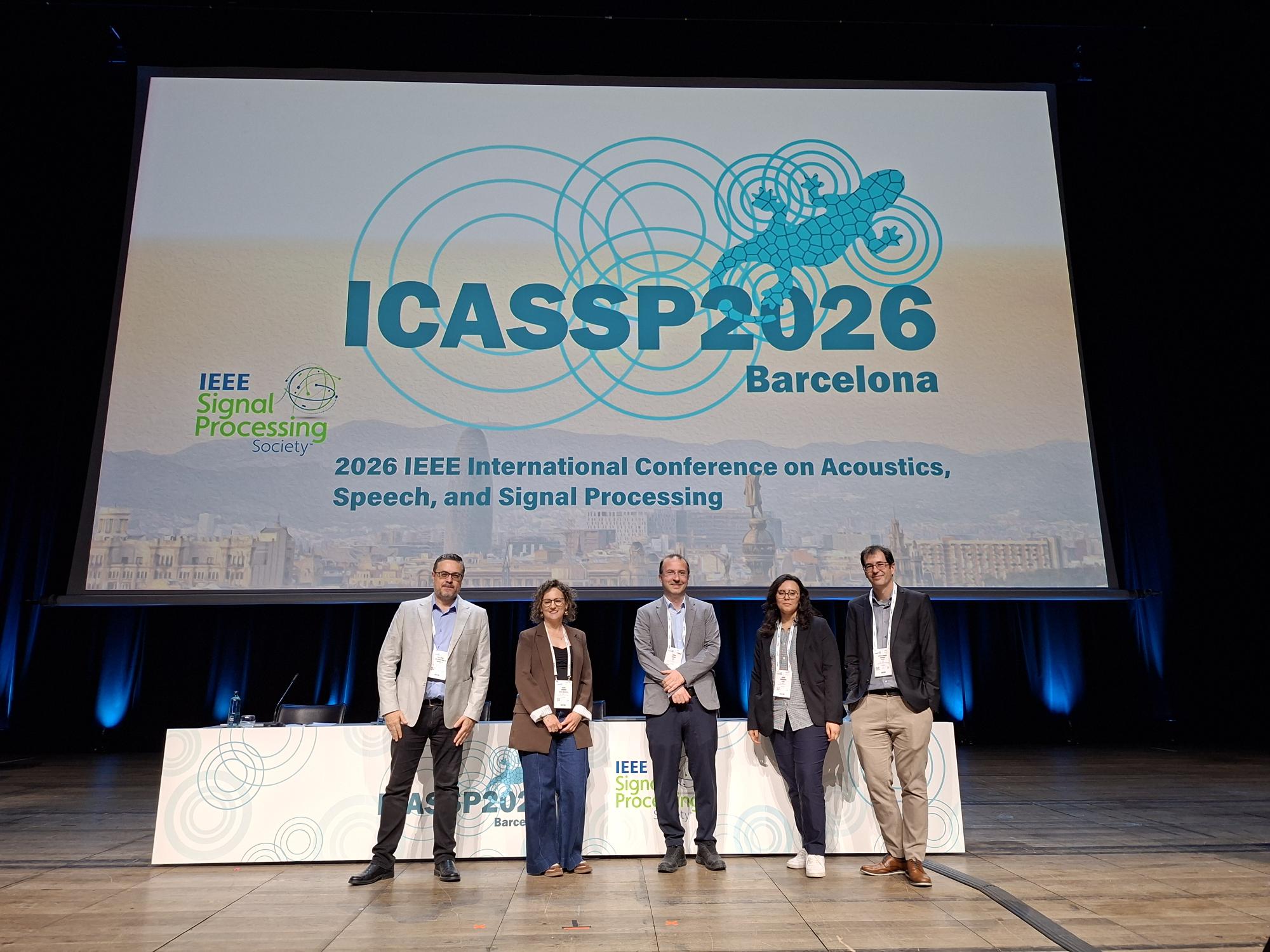
On May 6, 2026, UNITY-6G partners participated in the 2026 IEEE International Conference on Acoustics, Speech, and Signal Processing (ICASSP 2026) in Barcelona, Spain, contributing to one of the leading international forums on signal processing and next-generation communication systems.
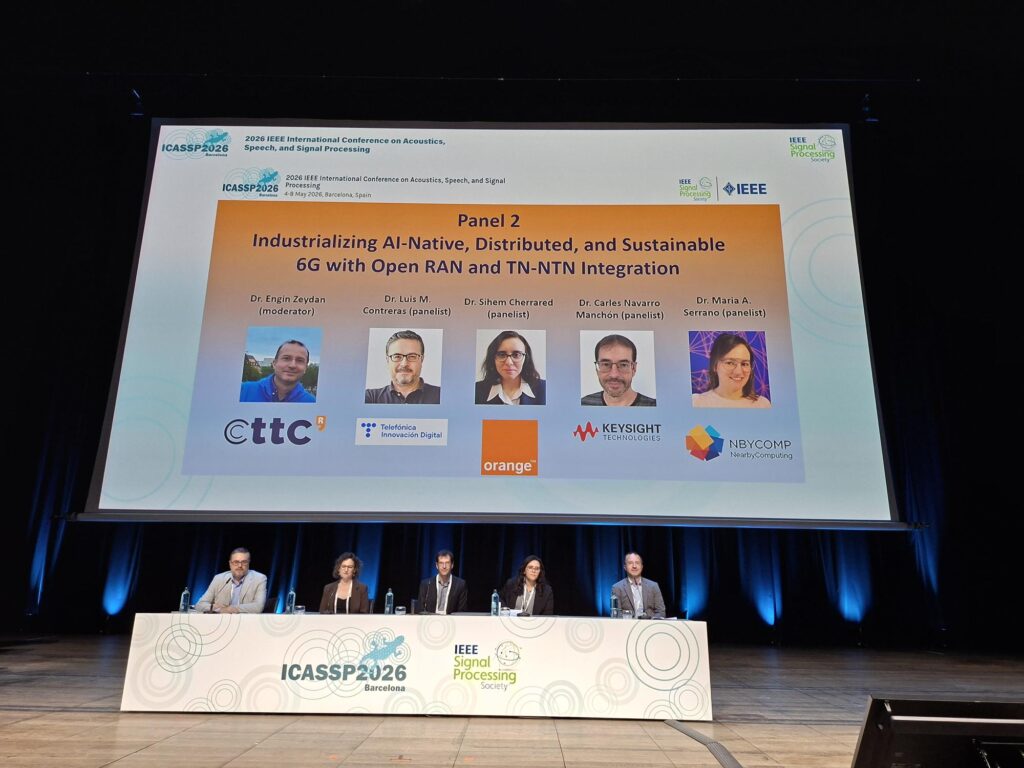
Within the conference programme, UNITY-6G organised and contributed to Panel 2: “Industrializing AI-Native, Distributed, and Sustainable 6G with Open RAN and TN-NTN Integration”, bringing together key stakeholders from operators, vendors, and applied research to discuss the transition of 6G technologies from research concepts to industrial deployment.
High-level panel discussion on industrial 6G
The panel was moderated by UNITY-6G Coordinator Engin Zeydan (CTTC) and featured distinguished experts from industry and research:
- Luis M. Contreras (Telefónica)
- Sihem Cherrared (Orange Innovation)
- Carles Navarro Manchón (Keysight Technologies)
- María A. Serrano (Nearby Computing)
The session focused on the key challenges and enablers for industrialising 6G systems in real-world environments.
Key topics discussed
The panel addressed several critical dimensions of future 6G networks, including:
- The transition from unified 6G architectures to scalable operational systems
- The evolution of TN-NTN convergence from experimental setups to commercial services
- The practical limits of AI-native automation in network control and orchestration
- Ongoing interoperability challenges in multi-vendor Open RAN ecosystems
- The role of network exposure frameworks in AI-driven environments (e.g., CAPIF, CAMARA APIs)
- The feasibility of achieving measurable sustainability in 6G networks beyond theoretical KPIs
The discussion highlighted that while significant progress has been made in research, the deployment of 6G systems will require addressing operational complexity, regulatory compliance (AI Act, GDPR, CRA), AI governance, and sustainability constraints.
Bridging research and industrial deployment
A central outcome of the session was the recognition that AI-native and distributed 6G architectures must be evaluated not only in terms of performance, but also in terms of deployability and operational feasibility. The panel emphasised the need to align advanced research in Open RAN, intent-based networking, and cloud-native orchestration with the realities of large-scale telecom operations.
UNITY-6G contribution
Through its participation at ICASSP 2026, UNITY-6G reinforced its role in shaping the global discussion on industrial 6G systems, ensuring that innovations in AI-driven networking, TN-NTN integration, and distributed orchestration are grounded in real-world constraints and deployment pathways.
The engagement in Barcelona further strengthened collaboration between operators, vendors, and research institutions, supporting the project’s objective of enabling secure, scalable, and sustainable next-generation communication infrastructures.